
When it comes to finding the perfect piano to use in your home or wherever you might use one, there is a lot of thought and consideration that needs to go into the decision to make sure that you get the best one to match up with your needs. If you want to find one of the best digital pianos you can find when it comes to Yamaha, you will be more than pleased with this particular piano reviewed below. While it might not have all of the features you are looking for, chances are good that it will have more than enough to help get the job done and give you the best results you are looking for.
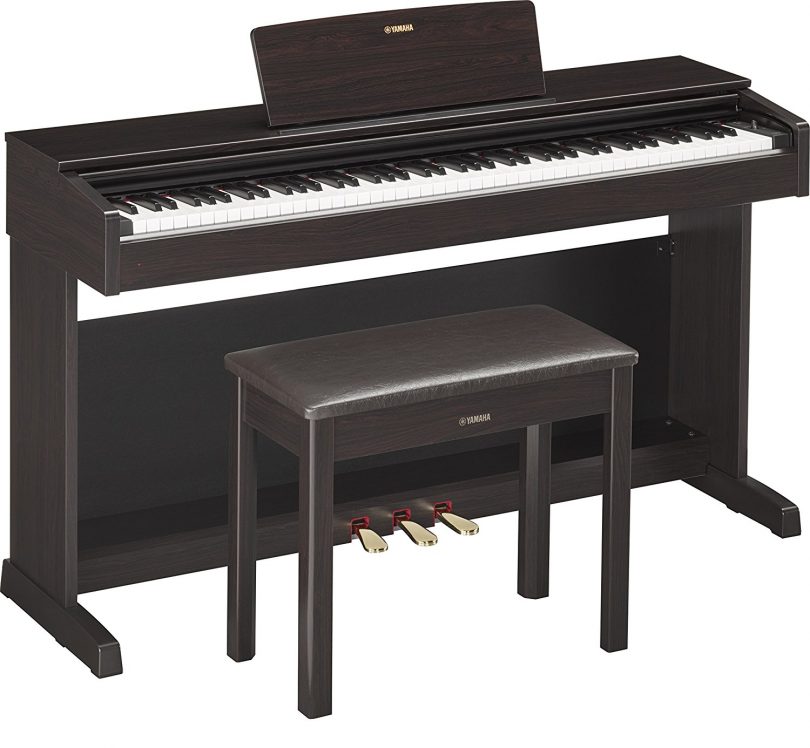
In terms of its technical appeal, the Yamaha YDP143R Digital Piano has been praised for its ‘Graded Hammer Standard’ keyboard
action, which Yamaha claim helps build proper finger technique and strength. This is an unusual feature in the keyboard market. Where most electronic products, even those created by Yamaha, are reliant on sensing touch but not pressure, the Yamaha YDP143R Digital Piano replicates the full complexity of playing an acoustic piano by featuring this pressure sensitivity absent from many digital pianos. This is a fantastic, often neglected way of teaching piano through a digital instrument – the appropriate pressure on the keys is, well… key.
Another special selling point of the Yamaha YDP143R Digital Piano is what the company call their ‘Improved Pure CF Engine’.
If that seems like meaningless jargon, just google the Yamaha CFIIIS concert grand piano – what the CF engine does is replicate the priceless sound of this legendary piano. This means that when you play the Yamaha YDP143R Digital Piano, the notes you play aren’t merely stock sound effects, but the highest quality recordings of one of Yamaha’s most complex, sought-after works of musical craftsmanship. For those who are really looking for a special sound, this piano’s CF engine is nothing short of spectacular.
Product Specifications:
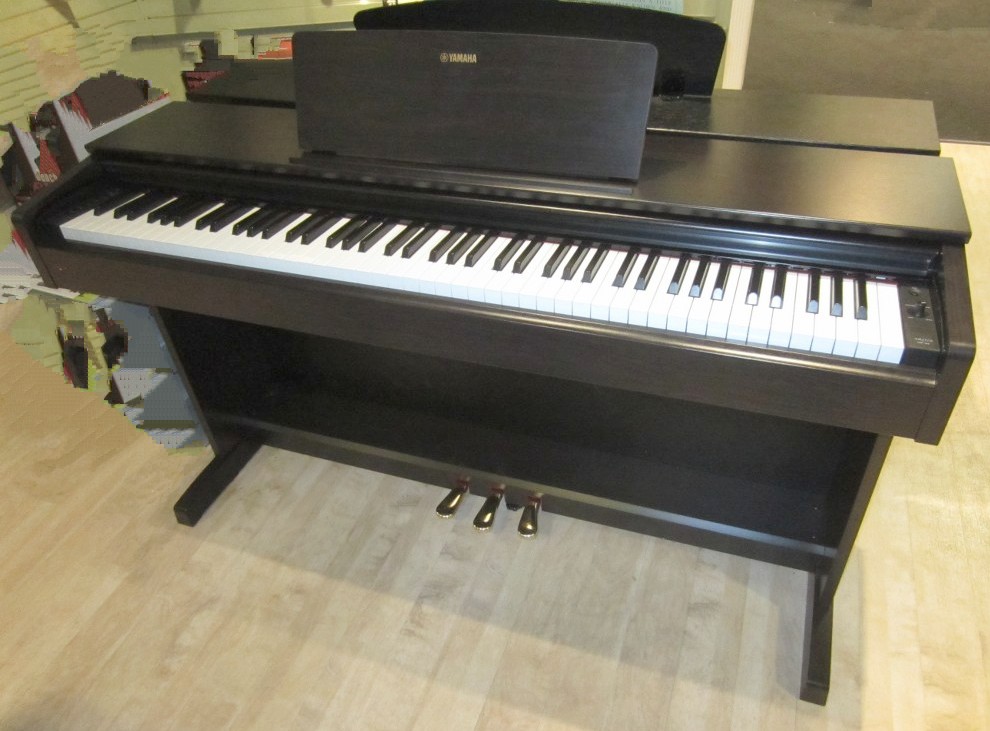
This 88-key piano keyboard provides a heavier touch in the low end and lighter touch in the high end in the integrated “Graded Hammer Standard (GHS)”. The benefit to this is that it mirrors the touch you’d find on a traditional acoustic piano. The pedals are unique in that the “Stereo Sustain” pedal samples provide mellow reverb when the damper pedal is pressed.
The digital library comes with classic piano based songs to assist new and intermediate players in learning the instrument using the accompanying book, while playing along. Or, the piano can act as a jukebox, playing on its own!
With built in recording capabilities you don’t have to hassle with outside equipment to capture your sessions. It is capable of recording up to 2 separate tracks that can be overlapped to play simultaneously. The output file is in the SMF Format which is the widely used Standard MIDI file; allowing playback on most computers.
Yamaha has intuitively (in keeping up to date on all new technology) issued what they call the “Digital Piano Controller” app for iPhone. Even their own sales material states that the app is quicker to access many of the features and settings, than the piano’s own controller. And, of course, you can record that way as well as add another instrument.
A feature I can’t imagine living without, and one that is only available on Yamaha pianos is the unique headphone device. They call it a “Stereophonic Optimizer”. Within the headphones, it has the ability to separate the sound from the piano – almost as if it is coming across in full surround sound – which is truly awesome in order to hear what a recorded sound would sound like (versus the live sound you are playing and listening to).
They have another feature they call “Intelligent Acoustic Control (IAC)” which makes playing at a low volume less troublesome. It automatically adjusts the volume of bass and treble to the composition of a louder rendition with more depth. It also is intelligent enough to match those adjustments into your speaker system when played at the lower volume.
Often, the wood thickness inside the actual piano cabinet can affect the highs and lows by blocking sound, or even pushing it through a wall where the building materials are quite thin. They have solved this too with their “Acoustic Optimizer” that regulates the flow of sound and tone regardless of where it hits the inside of the cabinet.
You can connect the piano directly into your computer or smart phone. You have to buy a special Yamaha cord (UD-BTO1) or use a “Lightening USB Camera Adapter”. It can also be hooked up wirelessly. Once hooked up, you can interface with a variety of the many music apps available on the market.
Pros:
An aesthetically pleasing piano, with an authentic feeling and a distinct digital twist.
The Graded Hammer Standard keyboard action means pressure-sensitive keys, which in turn means a genuinely complex, layered playing experience.
The Improved Pure CF Engine means that when you play, each strike of the keys produces a sound recorded straight from one of the greatest pianos of the present day.
Working pedals and a 192 note polyphony mean that no piece is too complicated for this digital piano – there are no limits but skill.
Cons:
Impractical when compared to other keyboards and digital pianos – bulky and not easily transported, the Yamaha YDP143R Digital Piano should not be used as a substitute for a lightweight keyboards.
The price. It’s no surprise that such a powerful piece of equipment doesn’t come cheap, but this is no small investment to make – if you’re not sure about purchasing it, then don’t. If you’re not sure how serious you are about playing the piano, start with something smaller and cheaper before making the move to an instrument like this.
Final Conclusion:
The Yamaha YDP143R Digital Piano arguably reaches new heights of traditional piano emulation. It is a complex but highly approachable piece of kit with a striking, resonant sound and some particularly special features. It’s great both for beginners and piano aficionados – if you’re willing to pay the steep sum it demands.